Tomodachi Life: Living the Dream
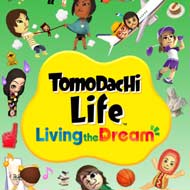
In Tomodachi Life: Living the Dream you begin by creating an island and filling it with Mii characters whose appearances, voices, personalities, and habits are chosen by you. The important part is that these residents do not simply wait for instructions: they develop friendships, arguments, romances, routines, and unexpected opinions while the island continues to change with the passing of real-world time. Your role is closer to a caretaker and social director than a traditional player character, guiding situations without controlling every conversation.
| Genre | Life and social simulation |
| Platform | Nintendo Switch; playable on Nintendo Switch 2 |
| Release year | 2026 |
| Core mechanic | Create Mii residents, satisfy their needs, and influence relationships while they act autonomously. |
| Progression | Resident happiness, level-ups, island facilities, shops, decorations, and custom creations. |
Tomodachi Life: Living the Dream and Its Island Residents
The first hours are built around creating a small community. You can make a Mii from scratch, use the assisted creation process, or bring in characters based on people you know. Appearance is only the beginning because each resident also receives a personality, voice, energy level, quirks, favorite phrases, and preferences. A serious-looking Mii with a dramatic voice can behave completely differently from a cheerful character who constantly asks for snacks, and those contrasts are responsible for much of the game’s humor.
Residents live in individual homes, but they are not isolated. You can pick up a Mii and place that character near another resident to encourage a conversation. From there, the relationship may become a friendship, a rivalry, a romantic connection, or nothing memorable at all. The uncertainty is the point: players often use the phrase “Mii drama” for the sudden arguments, confessions, breakups, and unlikely friendships that emerge from ordinary interactions.
Beginners often expect every resident to follow a predictable schedule. That approach misses the appeal of the island. A Mii may ask for food, clothing, a gift, advice, or help with a small activity, but the result is not always what you expect. Giving a favorite meal can raise happiness quickly, while an unsuitable present may produce a blunt reaction that becomes a recognizable running joke.
Fresh Kingdom, Where & Wear, and Daily Island Routines
The island gradually becomes more useful as facilities and shops appear. Fresh Kingdom supplies food, Where & Wear offers clothing and unusual outfits, and T&C Reno helps shape the interiors where residents spend their time. The Marketplace changes its available goods according to the time of day, so checking back later can reveal something different from the morning selection. These locations turn ordinary care tasks into a light daily routine rather than a single checklist completed once.
Happiness is the main practical form of progression. When a Mii’s happiness gauge fills, that resident levels up and can receive a reward such as a gift, expression, phrase, or other personal bonus. Solving problems, choosing suitable food, and paying attention to individual preferences are more reliable than giving identical presents to everyone. Players who enjoy collecting and optimizing routines may focus on raising residents efficiently, while players who prefer comedy can ignore optimization and simply follow whichever request looks funniest.
One small detail makes the island feel unusually personal: residents speak with adjustable synthetic voices and can use custom phrases supplied by the player. Hearing a familiar character suddenly deliver an awkward sentence in an exaggerated voice is a moment that regular players recognize immediately. The effect is intentionally imperfect, and that artificial delivery is part of the charm rather than a flaw to be hidden.
Palette House and Island Customization
Palette House gives the game a creative layer beyond resident management. You can design pets, food, clothing, house exteriors, ground tiles, drinks, and other objects, allowing the island to reflect a particular joke, theme, or group of friends. The drawing tools are simple enough for quick experiments, but players who enjoy customization can spend considerable time making coordinated outfits and distinctive spaces.
Island layout also matters more than in the earlier series entries. Homes, shops, and other facilities can be arranged to create a personal neighborhood instead of leaving every location in a fixed arrangement. As the community expands, the island gains more room and more reasons to revisit it. A carefully planned layout is useful for players who enjoy design, while a chaotic arrangement often suits the game’s comic atmosphere just as well.
By the time several residents have developed relationships, the island begins to generate stories without much direct input. Roommates may react differently to sharing a home, couples can form after successful romantic interactions, and residents may ask for help with social problems that have no universally correct answer. The game is deliberately open-ended, so there is no final campaign or traditional victory screen; the ongoing goal is to maintain a lively community and discover what the residents do next.
Common Questions About Tomodachi Life: Living the Dream
How do you make Mii characters become friends or couples?
Start by creating compatible residents and place them near each other to encourage a conversation. Friendship can develop naturally after repeated interactions, while romance depends on the residents’ preferences, personalities, and the situations that occur. Picking up a Mii and moving that character beside another resident can create an opportunity, but it cannot guarantee a particular outcome.
How do you level up residents quickly?
Keep solving the problems shown by the residents and give them food, clothing, gifts, or other rewards that match their preferences. When the happiness gauge fills, the Mii levels up and allows you to choose a personal bonus. Checking Fresh Kingdom and Where & Wear regularly helps maintain a useful supply of items, although the most efficient choice is not always the funniest one.
What can you create in Palette House?
Palette House lets you make custom clothing, pets, food, house exteriors, ground tiles, drinks, and additional island objects. The creations can be tailored to a specific Mii or used as decorations for a broader island theme. Touch controls and controller input make quick sketches easy, while more detailed designs reward patience and repeated editing.
Tomodachi Life: Living the Dream works best when you treat the island as a living collection of personalities rather than a task list. Between Fresh Kingdom requests, Palette House creations, unexpected Mii drama, and the small satisfaction of watching a resident level up, the game builds its identity from moments that are difficult to plan. The lack of a conventional ending may disappoint players seeking a structured campaign, but for anyone who enjoys emergent stories, Tomodachi Life: Living the Dream offers a distinctive daily rhythm shaped by the residents you create.